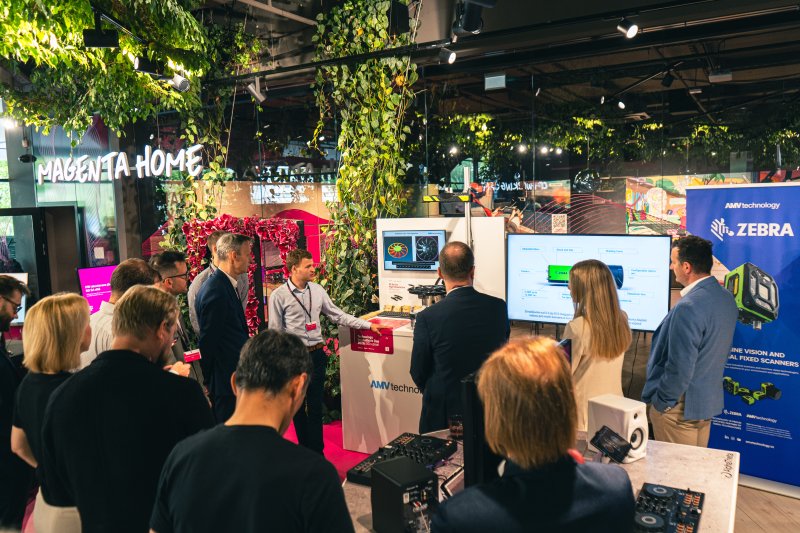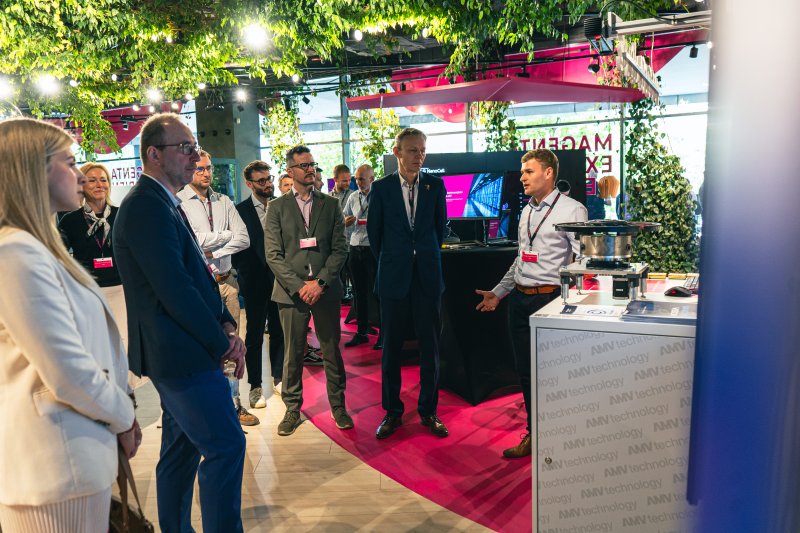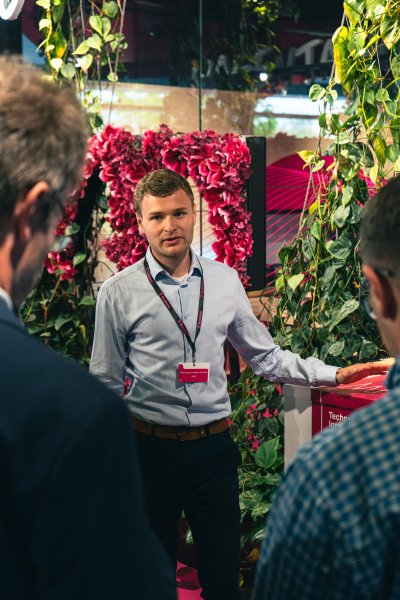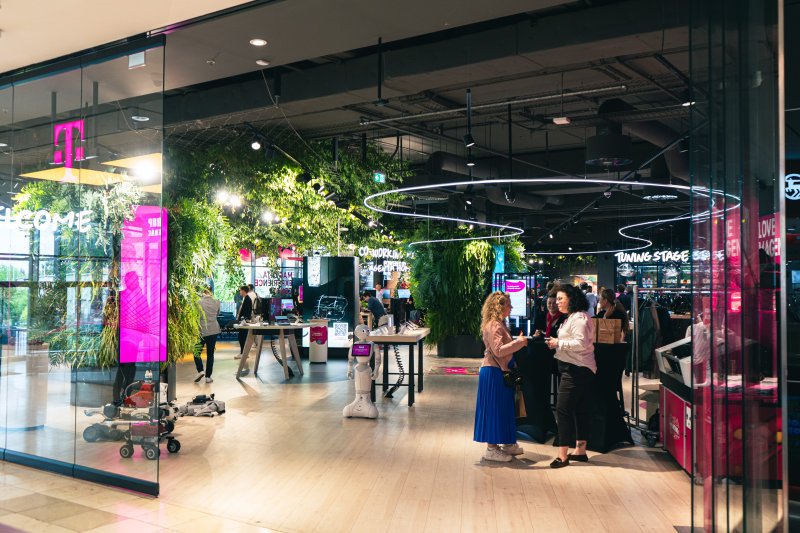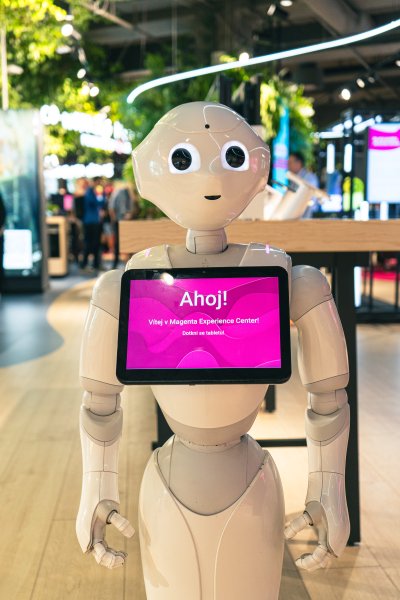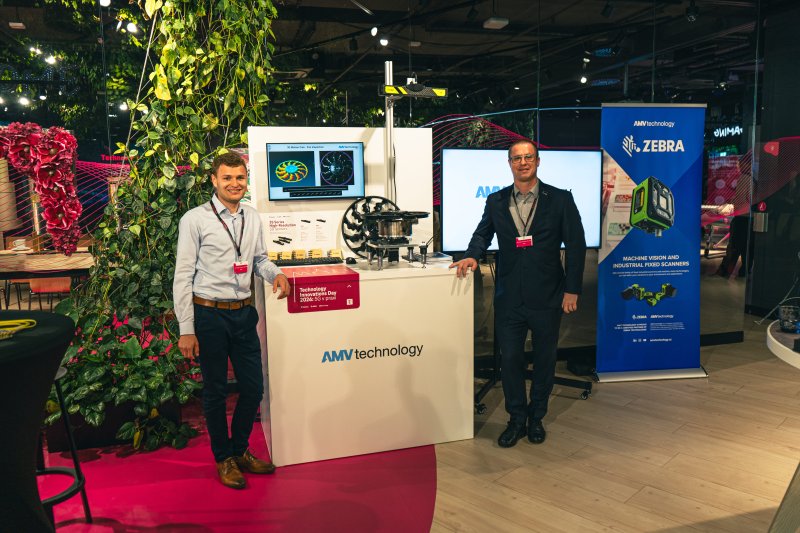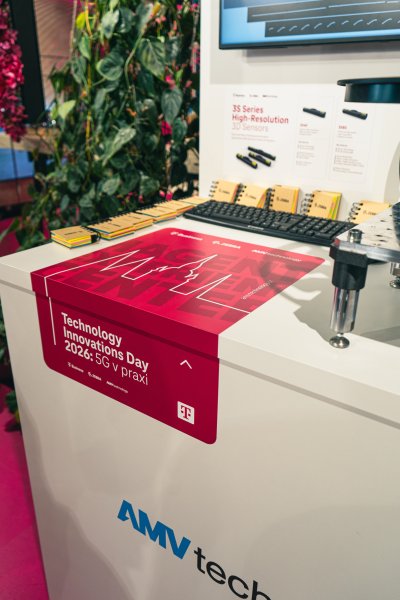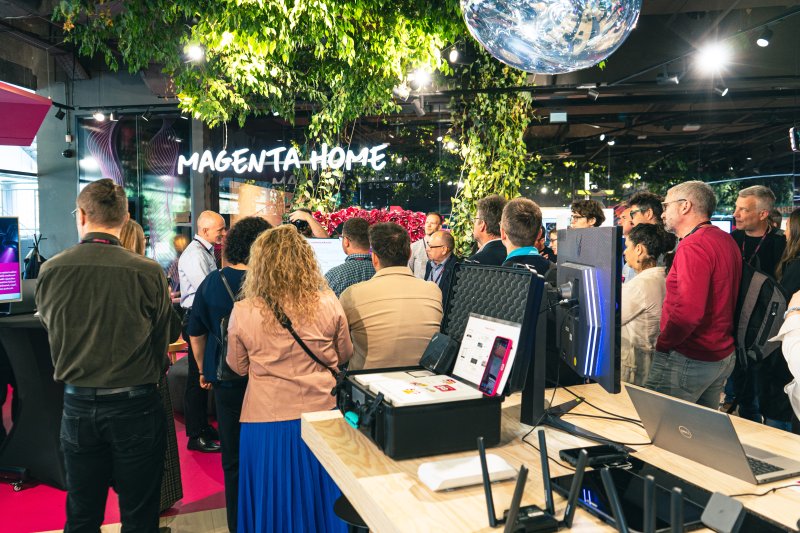
On Monday, May 4, we took part in Technology Innovations Day 2026: 5G in Practise, an event organized by T-Mobile at the Magenta Experience Center in Arkády Pankrác, Prague. Representing AMV, we presented machine vision and its use in manufacturing.
Modern technologies are best explained when people can see them with their own eyes. And that was exactly what Technology Innovations Day was about. The Prague Magenta Experience Center brought together practical demonstrations from various fields — from connectivity and robotics to industrial automation.
For us, it was an opportunity to present the area we work with every day: machine vision. We showed visitors how camera-based inspection can support manufacturing, what types of tasks it can solve, and why it makes sense to see it as a practical tool for improving quality, process stability, and production efficiency.
Machine Vision Is More Than Just a Camera Above a Conveyor
When people hear the term machine vision, many simply imagine a camera capturing an image. In practice, however, it is a much broader system. A camera or sensor captures the image, software evaluates it, and based on the result, a specific action can follow — for example confirming correct assembly, rejecting a defective part, reading a code, or guiding a robot.
At the event, we discussed common manufacturing tasks with visitors, including quality inspection, defect detection, presence verification, 1D and 2D code reading, working with 3D data, and automated robot guidance.
The important point is that this is not a technology of the distant future. Machine vision is already helping manufacturers today to increase inspection reliability, reduce error rates, and collect data that would often not be available with manual inspection.
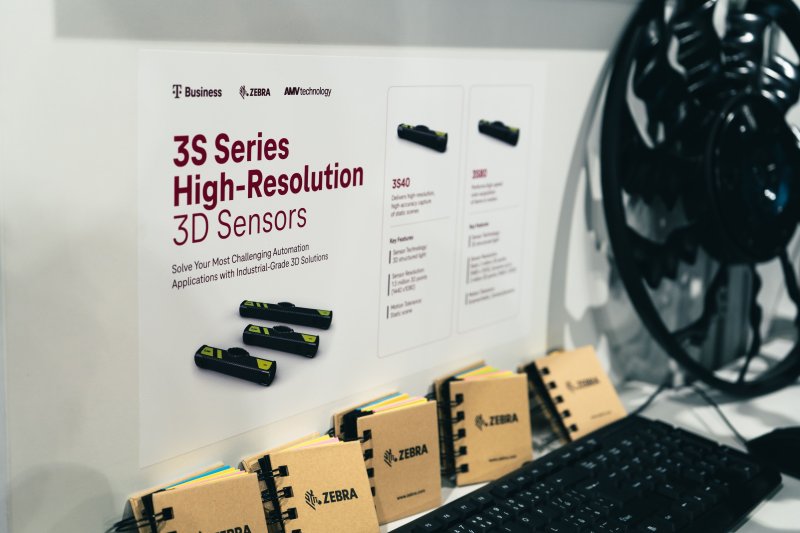
Practical Demonstration with a Zebra 3S Series 3D Sensor
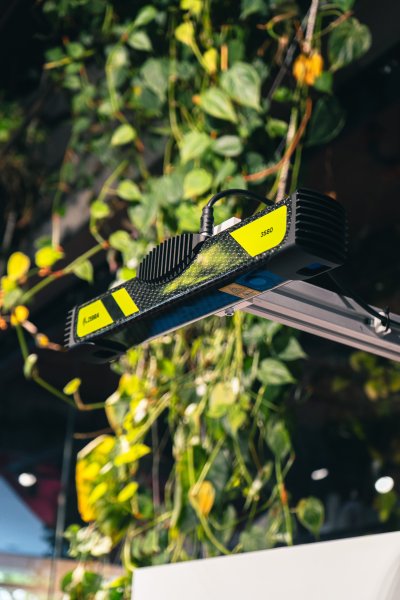
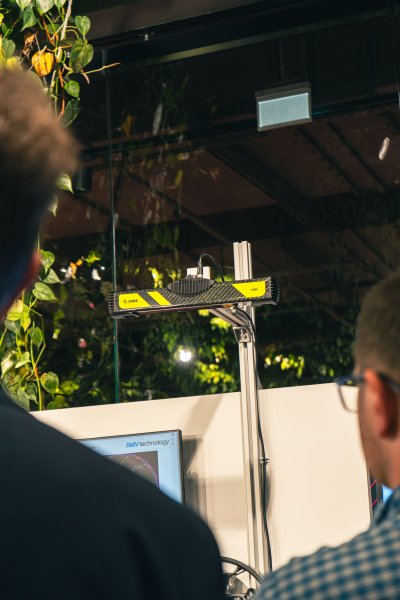
Our presentation also included a practical demonstration of 3D vision. We used a 3S Series 3D sensor from our partner Zebra Technologies, specifically the 3S80 model, which allowed us to show visitors how spatial data can be used in real applications.
Compared to a standard 2D image, 3D vision adds another layer of information. The system does not evaluate only shape or contrast in a flat image, but also works with depth, height, and volume. This is important, for example, when inspecting more complex shapes, irregular objects, measuring dimensions, or guiding robots.
Demonstrations like this clearly show that machine vision is not only about the camera or sensor itself. What matters is the complete application — selecting the right technology, setting it up correctly, evaluating the data, and connecting the result to the manufacturing process.
Why Events Like This Matter
For us, Technology Innovations Day was not only about presenting technology. Conversations with people from different companies and industries were just as important. Direct discussion is often the best way to understand where machine vision can truly make sense.
Every application is different. In some cases, the main topic is inspection speed. In others, it is result stability, code readability, surface defects, or precise robot guidance. That is why we always try to understand the specific challenge first, and only then propose a suitable solution.
We are glad we could be part of an event that presented technologies not only as interesting innovations, but above all as practical tools for real-world use. The well-prepared environment of the Magenta Experience Center suited this perfectly. Technologies could not only be described there — they could truly be demonstrated.
Thank you to T-Mobile for organizing the entire event, to Zebra Technologies for their support, and to all visitors who stopped by to talk with us.
Team AMV