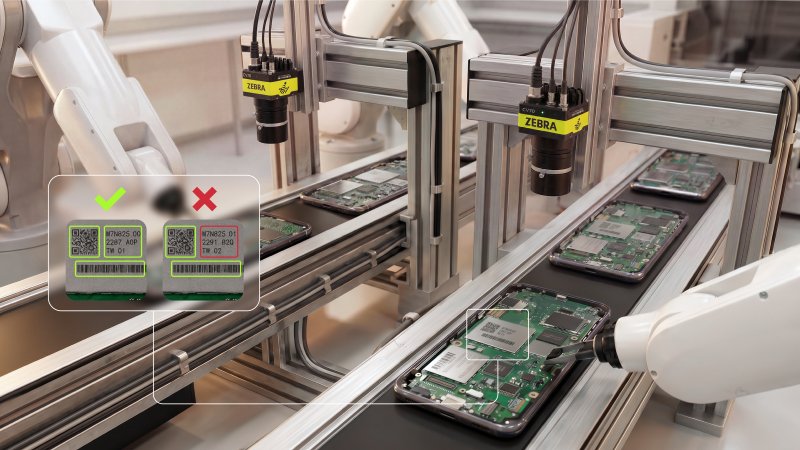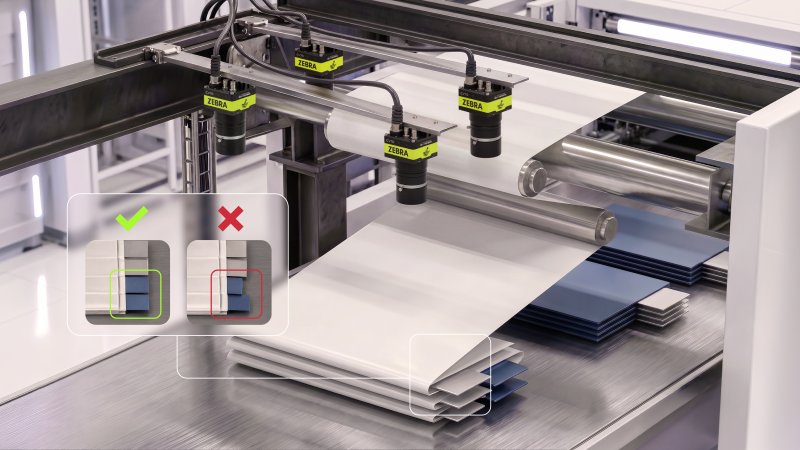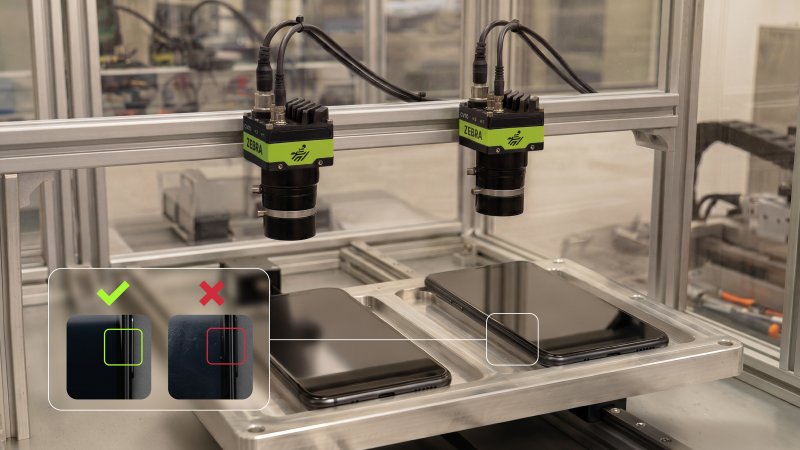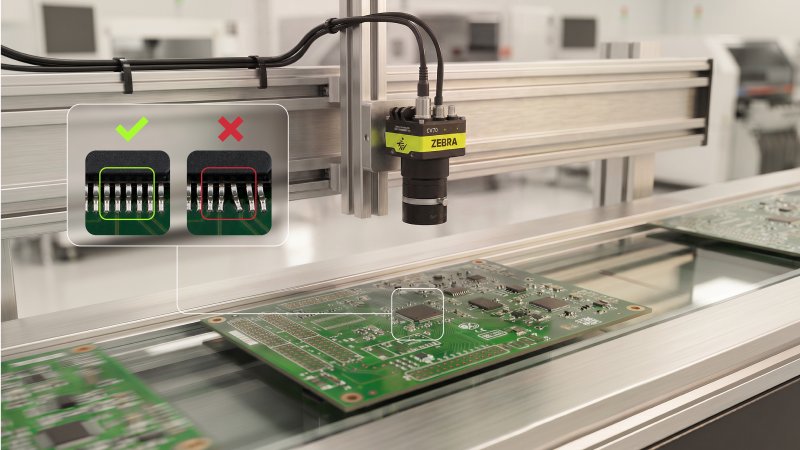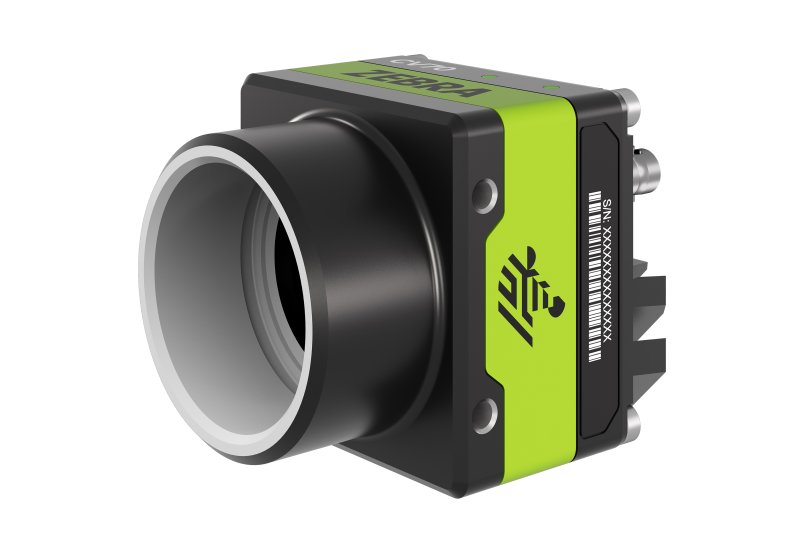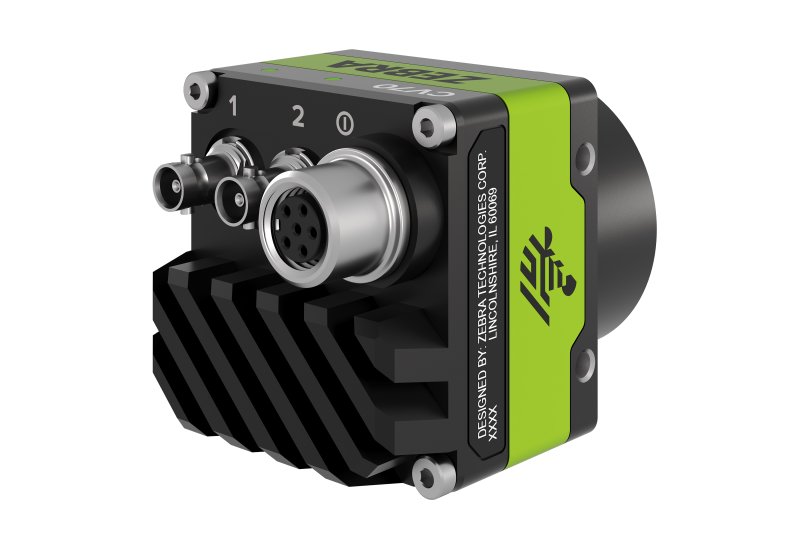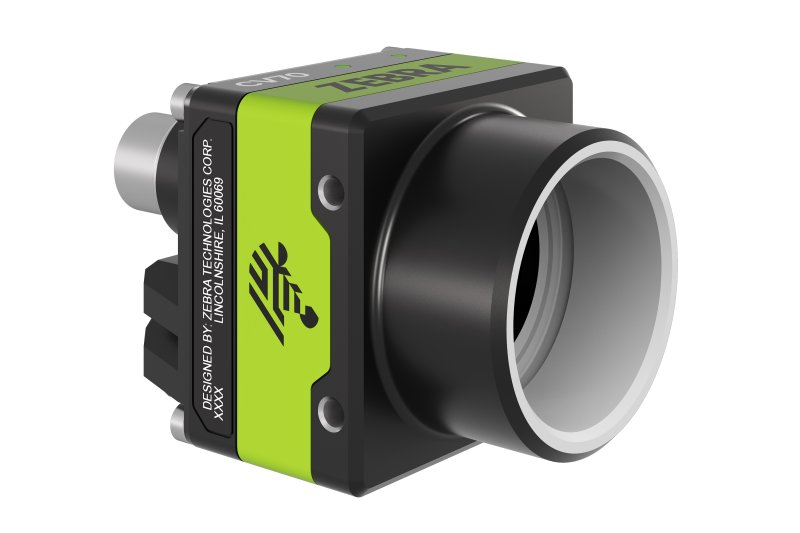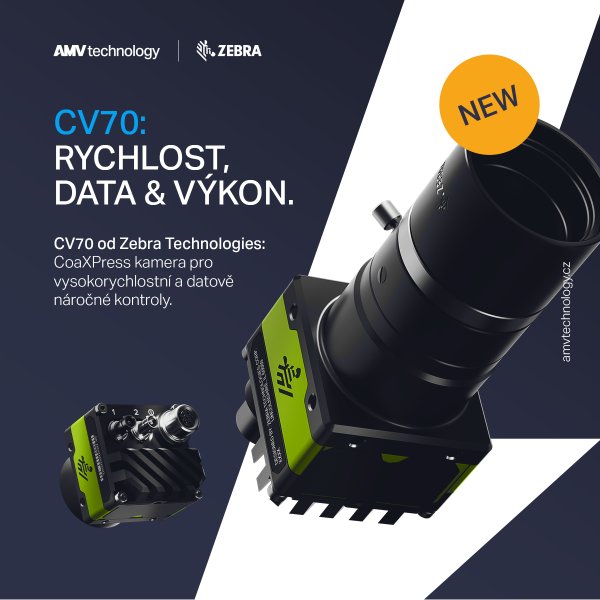
Our partner Zebra Technologies has introduced the new CV70 CXP industrial camera. This compact machine vision camera expands Zebra’s portfolio with a solution based on the CoaXPress 2.1 interface, designed for high-speed and data-intensive applications. The CV70 was introduced as part of Zebra Technologies’ vision ecosystem presentation at Automate 2026 and is aimed primarily at applications where high resolution, fast image acquisition and reliable transfer of large volumes of image data need to come together.
For us at AMV Technology, the CV70 is particularly interesting because it complements the well-known and proven CV60 series. While the CV60 makes sense for a wide range of standard 2D inspection tasks, the CV70 is designed for more demanding applications where frame rate, data throughput or the use of multiple cameras at the same time may become limiting factors.
When Resolution Alone Is Not Enough
In machine vision, camera resolution is often one of the first parameters discussed. It is important, but on its own it is not enough. On fast production lines, in multi-camera inspections or in applications with high data throughput, it is just as important how quickly image data can be transferred from the camera for further processing.
This is where CoaXPress 2.1 comes into play. The CV70 supports high-speed data transfer via the CXP interface and can be integrated with frame grabbers and Zebra Aurora software. In practice, this means the camera is not a standalone “island”, but part of a complete solution for quality inspection, measurement or guidance.
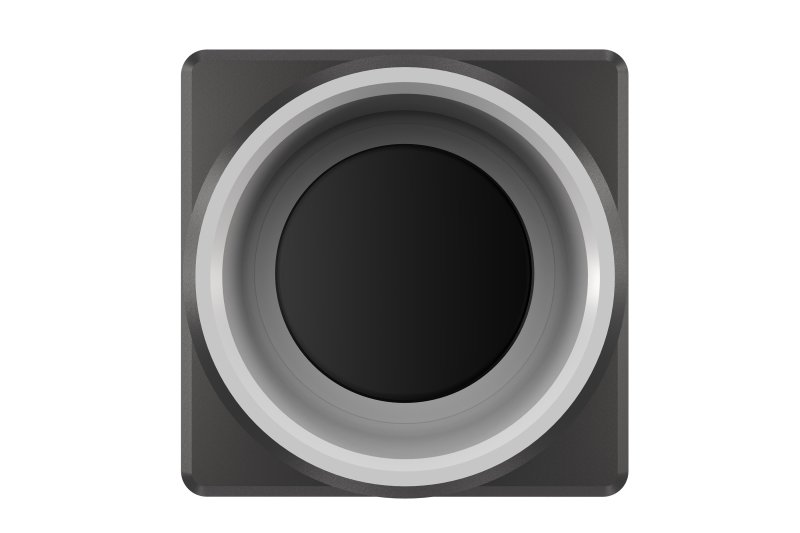
The CV70 is available in 5 MP, 9 MP, 18 MP and 25 MP variants. Depending on the specific configuration, it can reach frame rates of up to 289 fps, making it an interesting choice for applications where fine detail needs to be captured at high production speeds. The camera also features a compact housing, support for C-mount lenses, passive cooling and power supply via PoCXP or 24 V DC.
CV60 vs. CV70: Replacement or Extension?
We do not see the CV70 as a simple replacement for the CV60. Instead, we see it as the next level for applications where a standard GigE or USB 3.0 camera may no longer be the optimal choice.
The CV60 is a proven camera for standard industrial 2D tasks. Zebra Technologies presents it as a compact and reliable camera for automation and inspection applications with USB 3.0 and GigE Vision interfaces.
The CV70 takes a different direction. It is intended for applications with higher data throughput, shorter response times and, more often, for setups involving multiple cameras, higher resolution or very fast-moving parts.
| Area | Zebra CV60 | Zebra CV70 | ||
|---|---|---|---|---|
| Typical role | Universal 2D camera for industrial inspections | Powerful CXP camera for high-speed and data-intensive applications | ||
| Interface | USB 3.0 / GigE Vision | CoaXPress 2.1 | ||
| Suitable use | Standard quality inspection, presence checks, measurement, defect detection | High-speed inspection, multi-camera setups, high resolution at higher frame rates | ||
| Integration | Simpler architecture depending on the application | Typically with a frame grabber, powerful processing and Zebra Aurora software |
Where Does the CV70 Make the Most Sense?
According to Zebra Technologies’ materials, the CV70 is designed for demanding applications such as small part inspection, EV battery assembly and semiconductor inspection. The datasheet also mentions areas such as multi-camera machine vision, automotive, electronics, surface inspection, web inspection and PC-based scan tunnels.
From an integration perspective, we would most often consider the CV70 in situations where:
- the production line runs at a high cycle rate,
- a large amount of detail needs to be captured in a short time,
- one camera is not enough and the application requires multiple viewpoints,
- very fine defects, edges or structures need to be detected,
- a large volume of image data must be transferred reliably without creating a bottleneck.
Typical use cases may include assembly accuracy inspection, surface defect inspection, part inspection in automotive, electronics, battery production or other operations where milliseconds and image detail both matter.
The Camera Is Only the Beginning. The Whole Application Matters.
With cameras like the CV70, the most important factor is not just a single parameter in a datasheet. The result depends on the entire setup: lens, industrial lighting, triggering, mechanical mounting, computing performance, software and communication with the production line.
That is why the CV70 makes the most sense when it is designed from the very beginning as part of a complete machine vision system. Choosing a camera based only on resolution is not enough. It is necessary to understand exactly what needs to be inspected, how fast the part is moving, what type of defect must be detected and what result the system needs to send back to production.
This is where the role of an integrator becomes essential. At AMV Technology, we do not focus only on selecting components. We design complete machine vision applications — from initial testing and hardware design to integration, service and training.
What Should You Take Away from This New Camera?
The Zebra CV70 expands the possibilities wherever higher speed, higher data throughput and more precise image acquisition are required. It is not a camera for every standard inspection. But for the right application, it can become a very strong element of the complete solution.
If you are currently using the CV60 and are reaching limits in terms of speed, data flow or inspection complexity, the CV70 may be the logical next step. We will be happy to go through your specific application with you, verify whether the camera is suitable and design a complete solution that makes sense both technically and operationally.
Are you interested in finding out whether the CV70 is suitable for your application? Get in touch with us. We will be happy to discuss the possibilities of integrating it into your production.
AMV Team